Wat Phra That Hariphunchai Visitor Guide for Lamphun
A respectful first visit to Lamphun’s historic heart and one of northern Thailand’s most important Buddhist temples
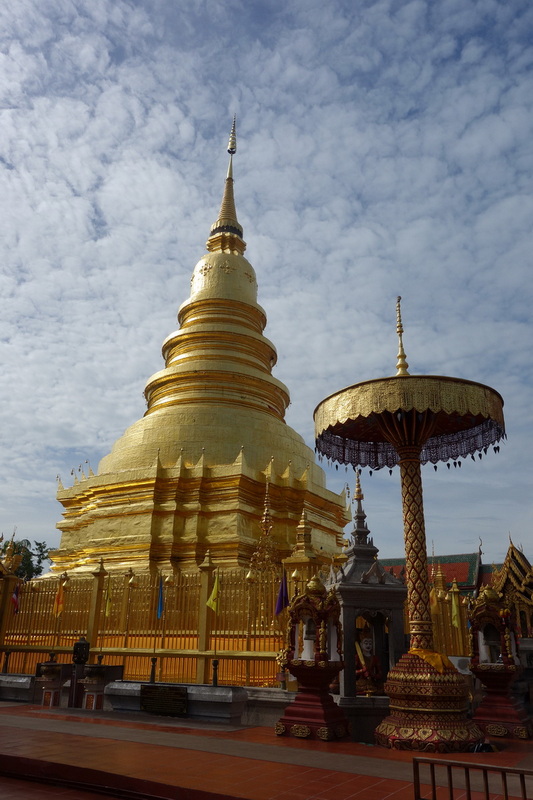
A visit to Wat Phra That Hariphunchai is also an introduction to Lamphun’s long identity as an important northern Thai city. The temple stands within the urban center of Lamphun, where religious life, local history, and everyday movement meet. Rather than being an isolated monument, it remains a functioning place of worship and a meaningful point of reference for residents and visitors. Known formally as Phra That Haripunchai Woramahawihan, the temple is associated with the ancient Hariphunchai kingdom and its Buddhist heritage. Its central chedi, bright with gold-colored surfaces, gives the compound a distinctive presence, while the surrounding buildings and gates reward a slower look. This guide explains what a first-time visitor can expect, how to behave respectfully, and how the temple fits into a wider day in Lamphun. For travelers comparing Important Temples In Northern Thailand, Wat Phra That Hariphunchai offers a particularly useful sense of place. It connects the history of the Ping River region with the living religious culture of Lamphun, making it more than a quick photographic stop.
Why the temple matters in Lamphun
Lamphun is one of the older urban centers in northern Thailand, and its historical name, Hariphunchai, remains closely connected with the city’s heritage. The area developed as an important center before the rise of the Lanna kingdom, and Buddhist institutions played a central role in its cultural landscape. Wat Phra That Hariphunchai preserves that connection in a form that visitors can still encounter within the modern city.
The temple is revered because its principal stupa is traditionally believed to enshrine relics of the Buddha. As with many sacred monuments in Thailand, religious meaning is carried through long-standing local traditions, acts of merit-making, and continued worship rather than through architecture alone. Visitors may see people lighting incense, making offerings, praying, or walking quietly through the compound. These are ordinary expressions of faith, not performances arranged for tourists.
The temple’s formal name, Phra That Haripunchai Woramahawihan, indicates its high status within Thailand’s monastic system. Travelers may also encounter the shorter names Phrathat Hariphunchai, Hariphunchai Temple, or Wat Hariphunchai. The different forms refer to the same major religious site and reflect the varied spellings used in travel material and local references.
The central chedi and the temple compound
The principal chedi is the visual focus of the visit. Its gilded appearance catches the light above the temple grounds and helps explain why the site is so recognizable in Lamphun. Look beyond the shine to the structure’s layered proportions, the raised base, and the decorative details that express northern Thai Buddhist design. The chedi should be viewed as a sacred object of devotion as well as an architectural landmark.
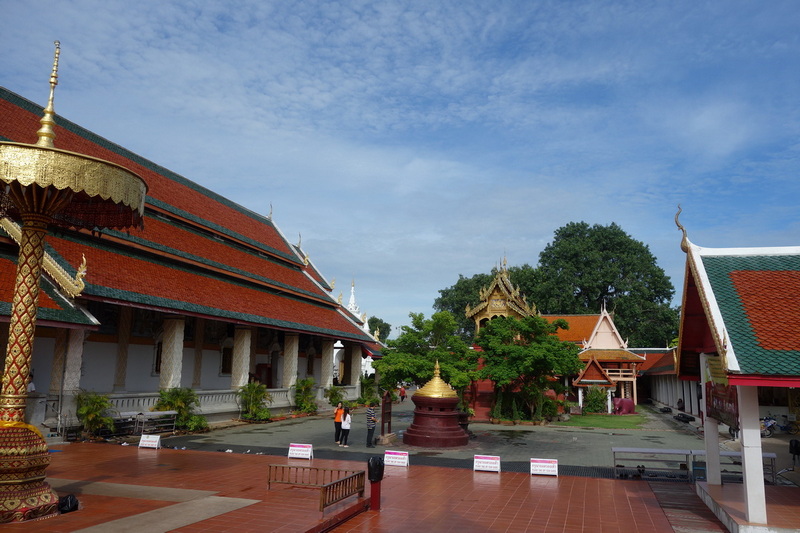
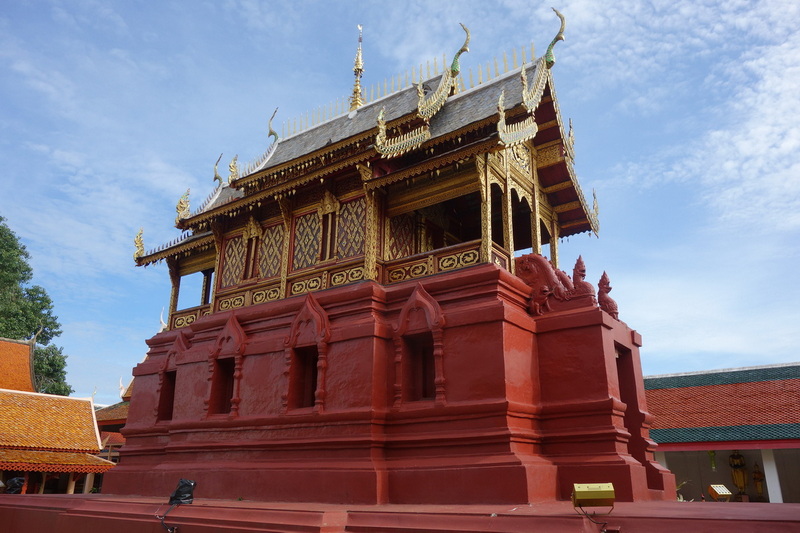
The surrounding compound contains additional halls, images, smaller devotional structures, and gateways. Each part contributes to the atmosphere of the temple, although not every building will have the same historical importance as the central stupa. Visitors who enter without rushing can notice changes in scale between the open areas around the chedi and the more enclosed prayer halls. Rooflines, carved details, painted surfaces, and guardian figures may also reveal how religious art is integrated into the setting.
A useful way to explore is to begin with a quiet circuit around the main chedi, then pause at the prayer halls and smaller shrines where appropriate. There is no need to treat the compound as a checklist of objects. Taking time to observe how worshippers use the space gives a clearer understanding of the temple than photographing every corner. If a ceremony or private religious activity is taking place, remain at the edge and follow the behavior of those present.
What first-time visitors should know
Wat Phra That Hariphunchai is in Mueang Lamphun District, close to the center of Lamphun. Its central location makes it practical to include while exploring the old city area, but visitors should still allow unhurried time rather than trying to fit the temple into a rushed transfer. Transport options and local conditions can change, so checking current directions before setting out is sensible, especially for travelers arriving from Chiang Mai or another nearby town.
Dress should be modest and suitable for a Buddhist temple. Clothing that covers the shoulders and knees is the safest choice, and loose, comfortable garments are useful in warm weather. Shoes are normally removed before entering certain prayer halls or buildings; look for footwear areas and follow local signs or the example of worshippers. Walk carefully, keep voices low, and avoid climbing on monuments, platforms, or decorative structures.
Photography may be appropriate in open public areas, but it is considerate to ask before photographing people engaged in prayer. Avoid using flash when it could disturb worshippers, and do not place cameras or personal items on sacred objects. Some images may be intended for devotion rather than display. A calm approach helps protect both the visitor’s experience and the dignity of the community that uses the temple every day.
The compound may feel different at different times, with periods of quiet observation and moments of greater activity around religious occasions. Exact opening arrangements, ceremonies, and access to individual buildings should be confirmed locally rather than assumed. The most reliable expectation is that the temple is a working religious site: some areas may be active, reserved, or temporarily less accessible when worship is underway.
Using the visit in a Lamphun Thailand Visitor Guide
For a Lamphun Thailand Visitor Guide, the temple works best as an anchor for understanding the city rather than as an isolated attraction. Its location makes it possible to combine religious heritage with a gentle walk through central Lamphun, where the pace is generally more measured than in larger tourism centers. The city’s history is visible through its temples, monuments, streets, and continuing local routines.
Plan to visit with enough flexibility to stop, sit, and look closely. The strongest impressions may come from small details: the arrangement of offerings, the sound of activity around a prayer hall, the contrast between bright chedi surfaces and shaded trees, or the way residents enter the grounds with clear purpose. These observations place the monument within present-day life and help avoid reducing it to a backdrop.
Visitors interested in the region’s history can think of Lamphun as a meeting point between older Hariphunchai traditions and the later Lanna cultural world. The temple does not explain every stage of that history by itself, but it provides a tangible starting point. Combining it with nearby historic sites can make the relationships among royal memory, Buddhist patronage, architecture, and local identity easier to appreciate.
A simple and considerate temple rhythm
A first visit can follow a straightforward rhythm. Begin by identifying the main entrance and observing whether any signs indicate areas for worshippers, footwear removal, or restricted access. Walk through the open compound before focusing on the central chedi. This first circuit gives a sense of orientation and prevents the visit from becoming an immediate rush toward the most photographed feature.
Next, spend time with the architectural details and watch how the space is used. You may choose to make a small offering or simply stand quietly; participation is not required for a meaningful visit. If you enter a prayer hall, sit or stand respectfully and keep your body language subdued. In Thailand, pointing feet toward Buddha images or stepping over offerings can be considered discourteous, so moving carefully is important.
Before leaving, look back at the temple as part of Lamphun’s urban landscape. The value of the visit lies partly in this wider perspective: the stupa is a celebrated landmark, but its importance is sustained by the people, ceremonies, and daily practices connected with it. That understanding is especially helpful for travelers visiting several Important Temples In Northern Thailand and wanting to distinguish living religious places from purely historical monuments.
Nearby Attractions
Wat Chamadevi
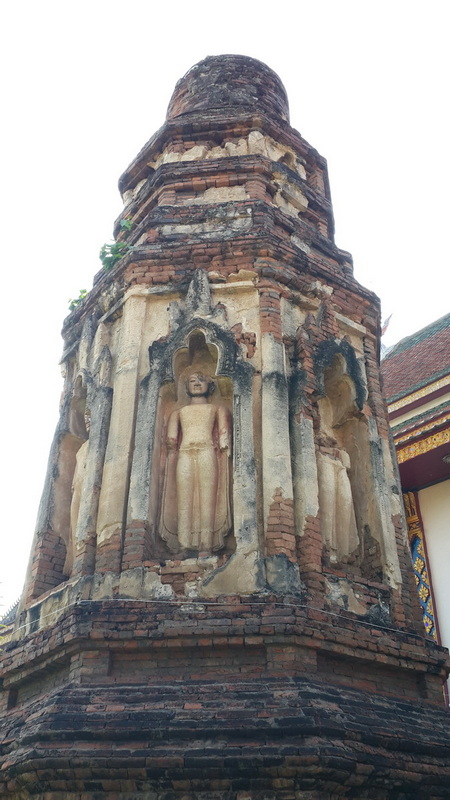
Wat Chamadevi is another important historic temple in Lamphun and a natural companion to Wat Phra That Hariphunchai. It is associated with the early Hariphunchai period and is especially known for its stepped, square-sided chedi, often called the Ku Kut chedi. The structure’s repeated niches and Buddha images create a very different visual impression from the golden central stupa at Hariphunchai.
A visit here adds historical depth because it encourages travelers to look at Lamphun as a former center of Mon culture and Buddhist learning. The grounds are also a place of active devotion, so the same basic etiquette applies: dress modestly, observe signs, and give worshippers space. Seeing both temples helps place Lamphun’s sacred architecture within a broader local story rather than treating either site as an isolated monument.
Wat Phra Yuen
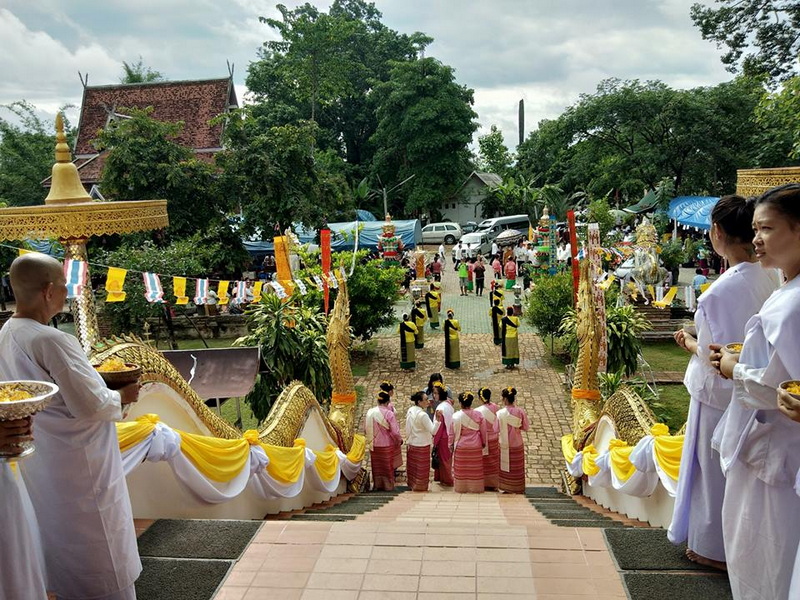
Wat Phra Yuen is a historic temple in Lamphun known for its distinctive square chedi surrounded by standing Buddha images. Its architectural arrangement offers another perspective on the region’s Buddhist heritage and provides a useful contrast with the central chedi at Wat Phra That Hariphunchai. The temple’s name is commonly understood as relating to standing Buddha images, which are a notable feature of the site.
The temple can be included by travelers extending their exploration beyond Lamphun’s best-known landmark. As at other active religious compounds, visitors should check local guidance, speak quietly, and avoid treating images or shrines as ordinary props. Together with Hariphunchai Temple, Wat Phra Yuen shows how several sacred sites can form a connected heritage landscape within a compact regional center.
Bringing the Experience Together
Wat Phra That Hariphunchai is rewarding because it brings practical sightseeing and living heritage together. Its golden chedi, historical associations, and central Lamphun setting offer an accessible introduction to the city, while respectful observation reveals meanings that photographs cannot capture. Allow time for a calm circuit, dress appropriately, and remain attentive to worshippers and local guidance. When paired with Wat Chamadevi and Wat Phra Yuen, the visit becomes a fuller journey through Lamphun’s Buddhist and Hariphunchai heritage.
